
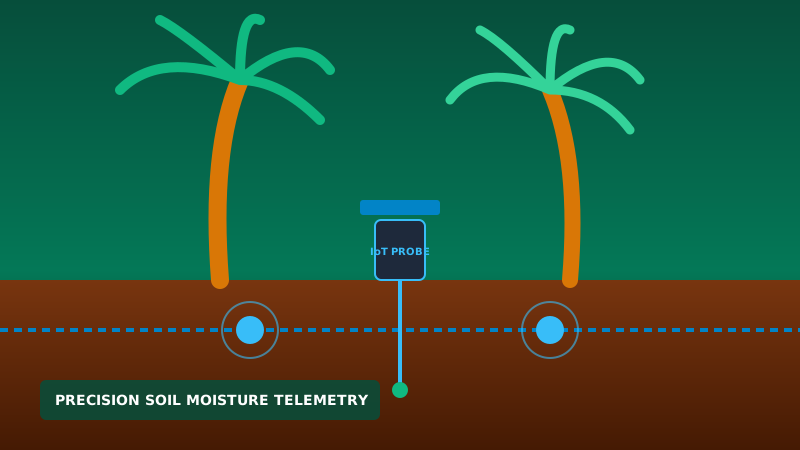
The Challenge: Subsurface Evapotranspiration Deficits
Mature coconut palms (Cocos nucifera) require between 55 to 110 liters of water per day depending on canopy surface area and solar radiation. Traditional surface flood and uncalibrated drip systems frequently over-saturate topsoil while failing to maintain adequate root-zone hydration at depths between 30 cm and 90 cm.
When soil matric potential falls below −50 kPa during peak summer temperatures, palms enter protective dormancy, shedding premature button nuts and curtailing inflorescence development for subsequent harvest cycles.
Key Research Takeaways from the Palakkad Trials:
- Automated Pulse Irrigation: Triggering short 20-minute drip cycles whenever moisture sensors recorded below 28% volumetric water content prevented root leaching.
- Energy Autonomy: Low-power LoRaWAN sensor nodes powered by 5W photovoltaic panels transmitted hourly soil tension packets without grid dependency.
- Nut Retention: Premature button shedding was reduced by 18.4% compared to timer-based flood controls.
Sensor Architecture & Subsurface Topology
The deployed sensor array utilizes multi-depth frequency domain reflectometry (FDR) probes installed at 30 cm, 60 cm, and 90 cm radii from the palm base. These probes measure dielectric permittivity in real-time, feeding telemetry to automated solenoid valves.
Dr. K. S. Radhakrishnan, Lead Research Agronomist at the Central Plantation Crops Research network, noted in his peer report: "By delivering water precisely when the active feeder root zone demands it, we eliminate saturated anaerobic soil conditions that encourage fungal root rot."
Long-Term Economic and Yield Implications
Farmer cooperatives participating in the trial reported recouping hardware deployment expenses within 14 months through water pump electricity savings and reduced labor overhead. The study demonstrates that sustainable precision horticulture is both ecologically imperative and commercially sound for smallholder collectives.
Reader Discussion (3 Responses)
Crucial data on the 60cm feeder root layer. We observed similar button retention results in our Kasaragod test plots when combining FDR probes with coir mulch blankets.
The solar telemetry nodes operated flawlessly even during monsoon power outages. Looking forward to the full data release next month.